AEGIS ATLAS shield logo
AEGIS ATLAS
Global Intelligence Architecture
AA
LIVE
SOURCE / Global: Official advisory and global OSINT stream ready while current-events cache refreshes · AEGIS ATLAS | OSINT / Global: Security, conflict, unrest, health, weather, and economic stress indicators under watch · AEGIS ATLASSOURCE / Global: Official advisory and global OSINT stream ready while current-events cache refreshes · AEGIS ATLAS | OSINT / Global: Security, conflict, unrest, health, weather, and economic stress indicators under watch · AEGIS ATLAS
← Back to Global Risk Map
Country DashboardBF / BFAState.gov advisory loaded
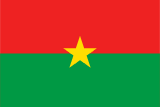
Burkina Faso flag

Country Intelligence Dashboard

Burkina Faso

Region pending

Level 4Do Not Travel
Generate Travel Brief
Official Advisory
Level 4
Do Not Travel
AEGIS Risk Index
92/100
Critical
Trajectory
Rapidly Deteriorating
AEGIS assesses elevated near-term and structural risk. Treat movement and planning assumptions conservatively.
Capital
Ouagadougou
Reference data

State Level 1–4

Official Travel Advisory

Level 4Do Not Travel

There was no change to the advisory level. The “health” risk indicator was added. Advisory summary was updated. Do Not Travel to Burkina Faso for any reason due to crime, kidnapping, terrorism, and health. Advisory summary Do not travel to Burkina Faso for any reason. U.S. government employee travel restrictions U.S. government employees working in Burkina Faso are not allowed to travel outside of Ouagadougou due to safety risks. Personnel are discouraged from nighttime travel to the Balkiui and Rayongo (also known as Dayongo) neighborhoods of Ouagadougou’s Arrondissement 11. Americans in Burkina Faso are strongly advised to take the same precautions. Crime State of Emergency The Government of Burkina Faso has declared a state of emergency in the following territories: The entire Sahel and East regions The provinces of Kossi and Sourou (Boucle de Mouhoun region) The province of Kenedougou (Hauts Bassins region) The province of Loroum (North region) The province of Koulpelogo (Center-East region) Violent crime is common throughout Burkina Faso. Crimes include kidnapping, assault, armed robbery, home invasion, and carjacking especially during local holidays and seasonal events. Roadblocks, including those set up by armed groups, occur throughout the country. In urban areas, police checkpoints may also be present, particularly at night. In addition, highways across the country are frequently the scene of attacks on government, civilian, and commercial targets. Local authorities may not recognize travelers with dual nationality. Your U.S. nationality may not be recognized if you are also a national of Burkina Faso. Review our information on Dual Nationality . Kidnapping The threat of kidnapping of Westerners by criminal or terrorist groups remains high throughout the region in Burkina Faso. This includes Ouagadougou and especially in the Sahel and East Regions. Extortion and kidnapping for ransom are big sources of financing for terrorist and criminal groups. Terrorism There is risk of terrorist violence, including terrorist attacks and other activity in Burkina Faso. Visit the U.S. Department of State's country reports on terrorism to learn more. Terrorist organizations continue to plan and conduct terrorist activities throughout Burkina Faso. Terrorists and armed groups target foreigners to kidnap for ransom. Terrorists may attack without warning: Spots frequented by foreigners anywhere in the country Police stations Customs offices Areas at or near mining sites Military posts Night clubs Hotels Restaurants Places of worship and religious sites International diplomatic missions Local security forces and civilians Health Medical services for routine and emergency procedures are limited. Health facilities are available in major cities. It may be harder to find adequate health care in rural areas. Public medical clinics lack basic resources and supplies. Patients must cover all costs for transferring to or between hospitals. Psychological and psychiatric services are limited, even in larger cities. Hospital-based care is only available through government institutions. Review the Health section of the Travel Guidance on this page for more information. For Americans in Burkina Faso: Enroll in the Smart Traveler Enrollment Program (STEP) to get important updates and alerts from the U.S. embassy. Enrolling helps the U.S. embassy contact you or your emergency contact in an emergency. Review our information on Terrorism and Travel to High-Risk Areas . Review our information on Crime Abroad , Americans Missing Abroad and for Victims of Crime . Have a plan to leave in an emergency that does not depend on U.S. government help. Review our information on Crisis and Evacuations . There is a risk of terrorist violence, including terrorist attacks and other activity in Burkina Faso. Visit the U.S. Department of State’s Country Reports on Terrorism to learn more. Establish your own personal security plan in coordination with your employer or host organization. Consider consulting with a professional security organization. Review the OSAC Country Security Report (formerly known as the Overseas Security Advisory Council) for Burkina Faso. Monitor local media for breaking news. Be prepared to adjust your plans. Prepare a will. Designate appropriate insurance beneficiaries or prepare a power of attorney. Discuss a plan with loved ones regarding care or custody of children, pets, property, belongings, non-liquid assets (collections, artwork, etc.), funeral wishes, etc. Share important documents, login information, and points of contact with loved ones. This helps them manage your affairs if you cannot return to the United States. Develop a communication plan with family, your employer, or host organization. This helps them monitor your safety and location as you travel through high-risk areas. Specify how you'll confirm you're safe (text, calls, etc.), how often, and who you'll contact first to share the information. Identify key sources of possible help for you and your family in case of emergency, such as the local U.S. embassy or consulate, FBI, the State Department, your employer (if traveling on business), and local friends or family in the high-risk area. Choose one family member to serve as the point of contact. If you are kidnapped or taken hostage, that person can communicate with kidnappers or hostage-takers, media, U.S. or foreign government agencies, and members of Congress. Establish a proof of life protocol with your loved ones. If you are taken hostage, your loved ones will know specific questions (and answers) to ask the hostage-takers to confirm that you are being held captive and alive. Leave DNA samples with your medical provider in case it is necessary for your family to access them for identification purposes. Use all available safety measures in your home or hotel, always including locking doors and windows, and setting the alarm. If asked to stop by police, stop only in well-lit areas or places where several officers are posted. Before you travel, delete any sensitive photos, comments, or content that might be seen as controversial or inappropriate in your destination. Do this for your social media accounts, cameras, laptops, phones, and other accounts and devices. Leave your expensive or sentimental belongings behind. Refer to our list of medical providers . Make sure your insurance includes medical evacuation coverage. Check with your doctor about required vaccines and shots for high-risk exposure before you go to Burkina Faso. We highly recommend that you buy travel insurance before you travel. Check with your travel insurance provider about evacuation assistance, medical insurance, and trip cancelation coverage. Visit the Centers for Disease Control and Prevention (CDC) website for the latest Travel Health Information for Burkina Faso.

Source: U.S. Department of State

Published/Updated: Date pending

Open official State.gov advisory →

AEGIS Trajectory Engine

Rapidly Deteriorating

AEGIS assesses elevated near-term and structural risk. Treat movement and planning assumptions conservatively.

Trajectory Score
100
Confidence: High
30 Day
High-risk watch
Confidence: High
90 Day
Sustained deterioration risk
Confidence: High
12 Month
Structural stress likely to persist
Confidence: Moderate

Primary Drivers

  • Official advisory posture: Level 4.
  • Security pressure: 92/100 across crime, terrorism, unrest, and kidnapping indicators.
  • Systemic pressure: 82/100 across health, natural hazards, and economic stress.
  • Economic signal: Managed Economic Pressure.

Planning Implication

Build redundancy into communications, movement, medical, evacuation, and source-verification plans. Avoid assuming local institutions can absorb additional shocks.

Watch Indicators

  • State Department advisory level or summary changes.
  • Protest, strike, election, conflict, or major criminal-violence developments in the OSINT feed.
  • Inflation, unemployment, contraction, debt, food/fuel pressure, or currency volatility signals.
  • Embassy security alerts, movement restrictions, natural disasters, health outbreaks, or airport/port disruptions.

AEGIS Threat Matrix

Operational Risk Categories

Official Level 1–4 is the fast read. The matrix breaks down why the country is risky and what threat categories matter most.

Crime
Critical
92

Street crime, organized crime, violent crime, theft, and personal security exposure.

Terrorism
High
82

Terrorist intent, capability, historic activity, and target attractiveness.

Civil Unrest
Critical
87

Protests, strikes, riots, political instability, and election-related disruption.

Health
High
82

Disease risk, healthcare access, medical evacuation complexity, and public health alerts.

Natural Hazard
Moderate
35

Storms, earthquakes, floods, wildfires, volcanos, and other environmental hazards.

Cyber
Critical
92

Device compromise, malicious WiFi, telecom exposure, surveillance, and data-theft risks.

Collection Risk
Critical
97

Targeting risk against travelers, officials, executives, NGOs, journalists, or exposed personnel.

Kidnapping
Critical
87

Kidnapping, wrongful detention, extortion, hostage taking, and ransom exposure.

Economic Risk Layer

Economic Indicators & Stability Pressure

Economic stress is treated as a driver for unrest, crime pressure, migration, corruption, institutional capacity, and PMESII-Economic analysis. Indicators are pulled from the World Bank layer when available and used as planning context, not as a replacement for official advisory guidance.

Economic Stress
36
Managed Economic Pressure

growth

GDP

2024
$23.1B

Current-dollar GDP gives the broad scale of the economy and state resource base.

Source →

growth

GDP Growth

2024
4.8%

Annual GDP growth helps identify contraction, recovery, or growth stress.

Source →

growth

GDP per Capita

2024
$982

GDP per capita provides a rough prosperity and capacity proxy.

Source →

stability

Inflation

2024
4.2%

Consumer inflation can signal food/fuel pressure, cost-of-living stress, and unrest potential.

Source →

labor

Unemployment

2025
3.5%

Unemployment is a pressure indicator for household stress, migration, crime, and unrest.

Source →

trade

Trade Exposure

2024
61%

Trade as a share of GDP can show exposure to border closures, sanctions, shocks, and supply-chain disruption.

Source →

debt

Government Debt

2023
62%

Government debt burden can constrain response capacity and increase austerity or instability pressure.

Source →

Key Economic Findings

  • Recent GDP growth is 4.8%, giving a baseline indication of economic direction.
  • Inflation is not currently the dominant economic stress signal in the latest World Bank indicator set.
  • Unemployment is below the primary AEGIS watch threshold in the latest indicator set.
  • Debt burden does not appear to be the primary economic stress driver based on the latest available indicator.

Trajectory Signal

Improving

Economic stress is treated as a driver for unrest, migration, corruption, criminal pressure, institutional capacity, and resiliency. It informs PMESII-Economic and trajectory analysis but does not replace official advisory guidance.

Source: World Bank Indicators APIView docs →

Country Reference Data

Factbook-Style Profile

Baseline geography, population, language, economy-adjacent, and movement-reference fields for quick planning context.

Mode
reference
Official Name
Burkina Faso
Capital
Ouagadougou
Population
24.1M
Area
272,967 km²
Region
Africa / Western Africa
Currencies
West African CFA franc (Fr)
Languages
French
Time Zones
UTC
Movement Notes
Landlocked • Drives on right • UN member • Borders: BEN, CIV, GHA, MLI, NER, TGO

Planner Mode

Professional ASCOPE / PMESII Planner

AEGIS Planner Mode answers the practical civil-considerations questions: what factors matter, why they matter, how they affect movement or objectives, which influences drive instability or stability, and what activities are realistic.

Embassy & Consulate Layer

U.S. Mission Support

Official mission context is pulled from State Department country travel information when available, with directory fallback links for verification.

Mode
state
Embassy

U.S. Embassy Ouagadougou

Ouagadougou

state-country-info
Phone
Embassy Name: U.S. Embassy Nassau Street Address: 235 Shirley Street Nassau, The Bahamas Phone: +1-242-461-5025 Emergency Phone: +1-242-461-5025 Fax: Email: ACSnassau@state.gov Web: http://bs.usembassy.gov/
Emergency
Visit the Bahamas Immigration website for the most current visa information. U.S. citizens are generally required to present a valid U.S. passport when traveling to The Bahamas, as well as proof of anticipated departure from The Bahamas. Those traveling to The Bahamas on a cruise may use another Western Hemisphere Travel Initiative (WHTI) compliant document, such as a U.S. passport card. However, we strongly recommend you obtain a passport before travel in case of an unforeseen emergency that re
Address
Embassy Name: U.S. Embassy Nassau Street Address: 235 Shirley Street Nassau, The Bahamas Phone: +1-242-461-5025 Emergency Phone: +1-242-461-5025 Fax: Email: ACSnassau@state.gov Web: http://bs.usembassy.gov/

Visit the Bahamas Immigration website for the most current visa information. U.S. citizens are generally required to present a valid U.S. passport when traveling to The Bahamas, as well as proof of anticipated departure from The Bahamas. Those traveling to The Bahamas on a cruise may use another Western Hemisphere Travel Initiative (WHTI) compliant document, such as a U.S. passport card. However, we strongly recommend you obtain a passport before travel in case of an unforeseen emergency that requires you to disembark and return by air. U.S. travelers coming for tourism will not need a visa for travel up to 90 days. All other travelers will need a visa and/or work permit. The Bahamas requires compliance with regulations to divert child abduction similar to U.S. policies . Review those policies before traveling. HIV/AIDS restrictions: The U.S. Department of State is unaware of any HIV/AID

Open Mission Source →

OSINT Feed

Current Signals

AEGIS highlights current public-source signals that may affect travel posture, planning, or country trajectory.

Active

SOURCE

Official advisory and global OSINT context will populate when the AEGIS event feed refreshes.

The country page remains usable with advisory, reference, and embassy layers while the current-events stream refreshes.

Low
Signal: Source standbyConfidence: ModerateSource: AEGIS ATLAS

AEGIS Data Layer

Data Fusion Notes

The country dashboard now fuses official advisory, embassy/consulate context, and baseline reference data before generating a travel brief.

AEGIS Analyst

Travel Brief Generator

Generates a traveler-friendly intelligence brief using official advisory context, current reporting, threat categories, embassy considerations, trajectory, and source-backed recommendations.

Cost control: generated country briefs are cached server-side for several hours. Use Refresh Brief only when you intentionally want a fresh AEGIS render.
Select Generate Travel Brief to render a current, source-backed brief for Burkina Faso. The Save Brief button appears after a brief is generated.