AEGIS ATLAS shield logo
AEGIS ATLAS
Global Intelligence Architecture
AA
LIVE
SOURCE / Global: Official advisory and global OSINT stream ready while current-events cache refreshes · AEGIS ATLAS | OSINT / Global: Security, conflict, unrest, health, weather, and economic stress indicators under watch · AEGIS ATLASSOURCE / Global: Official advisory and global OSINT stream ready while current-events cache refreshes · AEGIS ATLAS | OSINT / Global: Security, conflict, unrest, health, weather, and economic stress indicators under watch · AEGIS ATLAS
← Back to Global Risk Map
Country DashboardCD / CODState.gov advisory loaded
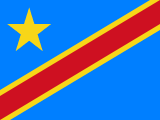
Democratic Republic of the Congo flag

Country Intelligence Dashboard

Democratic Republic of the Congo

Region pending

Level 4Do Not Travel
Generate Travel Brief
Official Advisory
Level 4
Do Not Travel
AEGIS Risk Index
92/100
Critical
Trajectory
Rapidly Deteriorating
AEGIS assesses elevated near-term and structural risk. Treat movement and planning assumptions conservatively.
Capital
Kinshasa
Reference data

State Level 1–4

Official Travel Advisory

Level 4Do Not Travel

The Level was changed from a Level 3 to a Level 4. Do Not Travel to the Democratic Republic of the Congo due to the Ebola Bundibugyo Virus Disease outbreak in Ituri Province in the DRC. The "Health” risk indicator was added and the “Other” indicator was removed. Advisory summary was updated. Do not travel to the Democratic Republic of the Congo (DRC) due to  crime , unrest , and  health. Advisory summary The U.S. government has limited ability to provide emergency consular services to U.S. citizens in the Democratic Republic of the Congo (DRC) due to the Health situation Health On May 15, the U.S. Centers for Disease Control and Prevention (CDC) issued a Level 2 (Practice Enhanced Precautions) Travel Health Notice for Ebola  for the Democratic Republic of the Congo (DRC).   On May 17, the World Health Organization (WHO) declared the Ebola outbreak in the DRC and Uganda a Public Health Emergency of International Concern .    Outbreaks of serious infectious diseases are common in the Democratic Republic of the Congo. Visit the Centers for Disease Control and Prevention (CDC) website for the latest Travel Health Information before you travel. The local health infrastructure is inadequate. Health services, hygiene, and quality control do not meet U.S. standards of care. Pharmacies are not well regulated. Locally available medications may be unsafe. Travel restrictions for government employees U.S. government employees working in the Democratic Republic of the Congo need special authorization to travel outside of Kinshasa due to safety risks. The U.S. embassy has extremely limited ability to provide routine or emergency consular services outside of Kinshasa. Due to safety risks, minor dependents cannot join U.S. government employees who work in the Democratic Republic of the Congo. Crime Petty crime is common. This includes crimes of opportunity like pickpocketing and burglary. Violent crimes include armed robbery, armed home invasion, and assault. Criminals may pose as police or security agents. Local police do not always inform the U.S. embassy when they arrest a U.S. citizen. They may also delay access to detained U.S. citizens or use violence and threats during interrogations. Unrest Demonstrations are common in many cities and can sometimes turn violent. Police may respond with force, resulting in deaths and arrests. Looting, assault, traffic obstruction, property damage, and other violent actions can happen when police don't respond quickly, or at all. North and South Kivu Provinces Active fighting is ongoing between armed groups and government military forces in the Kivu provinces; the M23 armed group is occupying major cities of Goma and Bukavu. Missiles and armed drones have been used in the conflict. The fighting has forced thousands of people from their homes which can cause instability in the province. Violent crime is common throughout the Kivu provinces. This includes murder, rape, kidnapping, and pillaging. Road travelers are common targets for ambush, armed robbery, and kidnapping. Terrorist and armed groups operate in the Kivu provinces. They have attacked military and civilian targets. This includes aid workers, businesspeople, and other NGO staff in the area. There is risk of terrorist violence, including terrorist attacks and other activity in North and South Kivu provinces. Visit the U.S. Department of State's country reports on terrorism to learn more. Demonstrations and large gatherings can occur throughout the region, especially in urban areas. Mobs can form rapidly and turn violent, posing a threat to bystanders. Due to the security risks, U.S. government employees working in the DRC must obtain special authorization to travel to North and South Kivu Provinces. Due to the risks, the U.S. government is unable to provide emergency services to U.S. citizens in the Kivu provinces. Visit our website for Travel to High-Risk Areas . Ituri Province Violent crime continues throughout Ituri province. This includes murder, rape, kidnapping, and pillaging. Road travelers are common targets for ambush, armed robbery, and kidnapping. Terrorist and armed groups operate in Ituri province. They have targeted both military and civilian sites. This includes humanitarian aid workers and other NGO staff in the area. There is risk of terrorist violence, including terrorist attacks and other activity in Ituri province. Visit the U.S. Department of State's country reports on terrorism to learn more. Demonstrations and large gatherings can occur throughout these regions, especially in urban areas. Mobs can form rapidly and turn violent, posing a threat to bystanders. Armed groups, individuals, and military forces routinely clash with each other. Civilians are frequently targeted in attacks. Due to the security risks, U.S. government employees working in the DRC must obtain special authorization to travel to Ituri province. Due to the risks, the U.S. government is unable to provide emergency services to U.S. citizens in Ituri province. Visit our website for Travel to High-Risk Areas . Tanganyika, Haut Lomami, and the 3 Kasai Provinces Violent crime like murder, rape, kidnapping, and robbery are common in these areas: Tanganyika Haut Lomami Kasai provinces: Kasai Oriental, Kasai Central, and Kasai. Road travelers are common targets for ambush, armed robbery, and kidnapping. Demonstrations and large gatherings can occur throughout these regions, especially in urban areas. Mobs can form rapidly and turn violent, posing a threat to bystanders. Armed groups, individuals, and military forces routinely clash with each other. Civilians are frequently targeted in attacks. Due to the security risks, U.S. government employees working in the DRC must obtain special authorization to travel to eastern DRC Region and the 3 Kasai provinces. Due to the risks, the U.S. government is unable to provide emergency services to U.S. citizens in eastern DRC Region and the 3 Kasai provinces. Visit our website for Travel to High-Risk Areas . Mai-Ndombe Province Violence in Mai-Ndombe is rising. There are also more police and military in the area, especially along the Route Nationale 17. Government security officials may limit travel for U.S. citizens when violence rises. Activity of armed groups could block passenger and freight traffic on regional routes in the province. Protests can occur without warning. Due to the security risks, U.S. government employees working in the DRC must obtain special authorization to travel to Mai-Ndombe province. Due to the risks, the U.S. government is unable to provide emergency services to U.S. citizens in Mai-Ndombe province. Visit our website for Travel to High-Risk Areas If you decide to travel to the Democratic Republic of the Congo: Visit our website for Travel to High-Risk Areas . Avoid demonstrations and crowds. Use caution when walking or driving. Always have a photocopy of your U.S. passport and DRC visa. Keep originals in a secure location. Carry your U.S. passport and DRC visa when crossing provincial borders or flying domestically. If you are arrested or detained, ask police or prison officials to notify U.S. Embassy Kinshasa immediately. Enroll in the Smart Traveler Enrollment Program (STEP) to receive Alerts from the U.S Embassy and make it easier to locate you in an emergency. Review the Country Security Report for the DRC. Prepare a plan for emergency situations. Review the Traveler’s Checklist . Ensure that documents and medications are easy to locate in case you need to leave on short notice. Visit the CDC page for the latest Travel Health Information related to your travel and return to the United States. We highly recommend that you buy insurance before you travel. Check with your travel insurance provider about evacuation assistance, medical insurance, and trip cancellation coverage. Develop a communication plan with family, your employer or host organization. Specify how you'll confirm you're safe (text, calls, etc.), how often, and who you'll contact first to share the information.

Source: U.S. Department of State

Published/Updated: Date pending

Open official State.gov advisory →

AEGIS Trajectory Engine

Rapidly Deteriorating

AEGIS assesses elevated near-term and structural risk. Treat movement and planning assumptions conservatively.

Trajectory Score
100
Confidence: High
30 Day
High-risk watch
Confidence: High
90 Day
Sustained deterioration risk
Confidence: High
12 Month
Structural stress likely to persist
Confidence: Moderate

Primary Drivers

  • Official advisory posture: Level 4.
  • Security pressure: 92/100 across crime, terrorism, unrest, and kidnapping indicators.
  • Systemic pressure: 82/100 across health, natural hazards, and economic stress.
  • Economic signal: Low Economic Stress.

Planning Implication

Build redundancy into communications, movement, medical, evacuation, and source-verification plans. Avoid assuming local institutions can absorb additional shocks.

Watch Indicators

  • State Department advisory level or summary changes.
  • Protest, strike, election, conflict, or major criminal-violence developments in the OSINT feed.
  • Inflation, unemployment, contraction, debt, food/fuel pressure, or currency volatility signals.
  • Embassy security alerts, movement restrictions, natural disasters, health outbreaks, or airport/port disruptions.

AEGIS Threat Matrix

Operational Risk Categories

Official Level 1–4 is the fast read. The matrix breaks down why the country is risky and what threat categories matter most.

Crime
Critical
92

Street crime, organized crime, violent crime, theft, and personal security exposure.

Terrorism
High
82

Terrorist intent, capability, historic activity, and target attractiveness.

Civil Unrest
Critical
87

Protests, strikes, riots, political instability, and election-related disruption.

Health
High
82

Disease risk, healthcare access, medical evacuation complexity, and public health alerts.

Natural Hazard
Moderate
35

Storms, earthquakes, floods, wildfires, volcanos, and other environmental hazards.

Cyber
Critical
92

Device compromise, malicious WiFi, telecom exposure, surveillance, and data-theft risks.

Collection Risk
Critical
97

Targeting risk against travelers, officials, executives, NGOs, journalists, or exposed personnel.

Kidnapping
Critical
87

Kidnapping, wrongful detention, extortion, hostage taking, and ransom exposure.

Economic Risk Layer

Economic Indicators & Stability Pressure

Economic stress is treated as a driver for unrest, crime pressure, migration, corruption, institutional capacity, and PMESII-Economic analysis. Indicators are pulled from the World Bank layer when available and used as planning context, not as a replacement for official advisory guidance.

Economic Stress
24
Low Economic Stress

growth

GDP

2024
$71.0B

Current-dollar GDP gives the broad scale of the economy and state resource base.

Source →

growth

GDP Growth

2024
6.1%

Annual GDP growth helps identify contraction, recovery, or growth stress.

Source →

growth

GDP per Capita

2024
$649

GDP per capita provides a rough prosperity and capacity proxy.

Source →

stability

Inflation

2016
2.9%

Consumer inflation can signal food/fuel pressure, cost-of-living stress, and unrest potential.

Source →

labor

Unemployment

2025
4.4%

Unemployment is a pressure indicator for household stress, migration, crime, and unrest.

Source →

trade

Trade Exposure

2024
101%

Trade as a share of GDP can show exposure to border closures, sanctions, shocks, and supply-chain disruption.

Source →

debt

Government Debt

2022
15%

Government debt burden can constrain response capacity and increase austerity or instability pressure.

Source →

Key Economic Findings

  • Recent GDP growth is 6.1%, giving a baseline indication of economic direction.
  • Inflation is not currently the dominant economic stress signal in the latest World Bank indicator set.
  • Unemployment is below the primary AEGIS watch threshold in the latest indicator set.
  • Debt burden does not appear to be the primary economic stress driver based on the latest available indicator.

Trajectory Signal

Improving

Economic stress is treated as a driver for unrest, migration, corruption, criminal pressure, institutional capacity, and resiliency. It informs PMESII-Economic and trajectory analysis but does not replace official advisory guidance.

Source: World Bank Indicators APIView docs →

Country Reference Data

Factbook-Style Profile

Baseline geography, population, language, economy-adjacent, and movement-reference fields for quick planning context.

Mode
reference
Official Name
Democratic Republic of the Congo
Capital
Kinshasa
Population
112.8M
Area
2,344,858 km²
Region
Africa / Middle Africa
Currencies
Congolese franc (FC)
Languages
French, Kikongo, Lingala, Tshiluba, Swahili
Time Zones
UTC+01:00, UTC+02:00
Movement Notes
Coastal access • Drives on right • UN member • Borders: AGO, BDI, CAF, COG, RWA, SSD, TZA, UGA, ZMB

Planner Mode

Professional ASCOPE / PMESII Planner

AEGIS Planner Mode answers the practical civil-considerations questions: what factors matter, why they matter, how they affect movement or objectives, which influences drive instability or stability, and what activities are realistic.

Embassy & Consulate Layer

U.S. Mission Support

Official mission context is pulled from State Department country travel information when available, with directory fallback links for verification.

Mode
state
Embassy

U.S. Embassy Kinshasa

Kinshasa

state-country-info
Phone
Road Conditions and Safety : In N’Djamena, main roads are paved; others within the city are dirt and gravel roads that have large ruts and potholes. During the rainy season, mid-June to mid-September, many roads become impassable. Numerous traffic accidents occur daily. Excessive speed, erratic driving habits, and chro
Emergency
Criminal Penalties: You are subject to local laws. If you violate local laws, even unknowingly, you may be expelled, arrested, or imprisoned. Individuals establishing a business or practicing a profession that requires additional permits or licensing should seek information from the competent local authorities, prior to practicing or operating a business. You may be detained for questioning by the police if unable to produce an acceptable form of identification. Convictions for possessing, using
Address
Road Conditions and Safety : In N’Djamena, main roads are paved; others within the city are dirt and gravel roads that have large ruts and potholes. During the rainy season, mid-June to mid-September, many roads become impassable. Numerous traffic accidents occur daily. Excessive speed, erratic driving habits, and chronic lack of road signs make driving dangerous. Street lighting is limited, and it is difficult to see pedestrians, cyclists, wheelchairs, and animals at night. Other risks include:

Road Conditions and Safety : In N’Djamena, main roads are paved; others within the city are dirt and gravel roads that have large ruts and potholes. During the rainy season, mid-June to mid-September, many roads become impassable. Numerous traffic accidents occur daily. Excessive speed, erratic driving habits, and chronic lack of road signs make driving dangerous. Street lighting is limited, and it is difficult to see pedestrians, cyclists, wheelchairs, and animals at night. Other risks include: Poor vehicle maintenance Headlights that are not used Vehicles with only one operable head light that give the appearance of being a motorcycle at night, often with deadly consequences for on-coming traffic To mitigate the threat of roadside crime or becoming stuck in sand/mud when driving outside of N’Djamena, travel in daylight hours only. Carry: Spare tires Food and water Maps and navigation e

Open Mission Source →

OSINT Feed

Current Signals

AEGIS highlights current public-source signals that may affect travel posture, planning, or country trajectory.

Active

SOURCE

Official advisory and global OSINT context will populate when the AEGIS event feed refreshes.

The country page remains usable with advisory, reference, and embassy layers while the current-events stream refreshes.

Low
Signal: Source standbyConfidence: ModerateSource: AEGIS ATLAS

AEGIS Data Layer

Data Fusion Notes

The country dashboard now fuses official advisory, embassy/consulate context, and baseline reference data before generating a travel brief.

AEGIS Analyst

Travel Brief Generator

Generates a traveler-friendly intelligence brief using official advisory context, current reporting, threat categories, embassy considerations, trajectory, and source-backed recommendations.

Cost control: generated country briefs are cached server-side for several hours. Use Refresh Brief only when you intentionally want a fresh AEGIS render.
Select Generate Travel Brief to render a current, source-backed brief for Democratic Republic of the Congo. The Save Brief button appears after a brief is generated.